DigiPilPass
Digital battery passport system that helps battery and accumulator manufacturers comply with the EU Battery Regulation.
Visit site
Overview
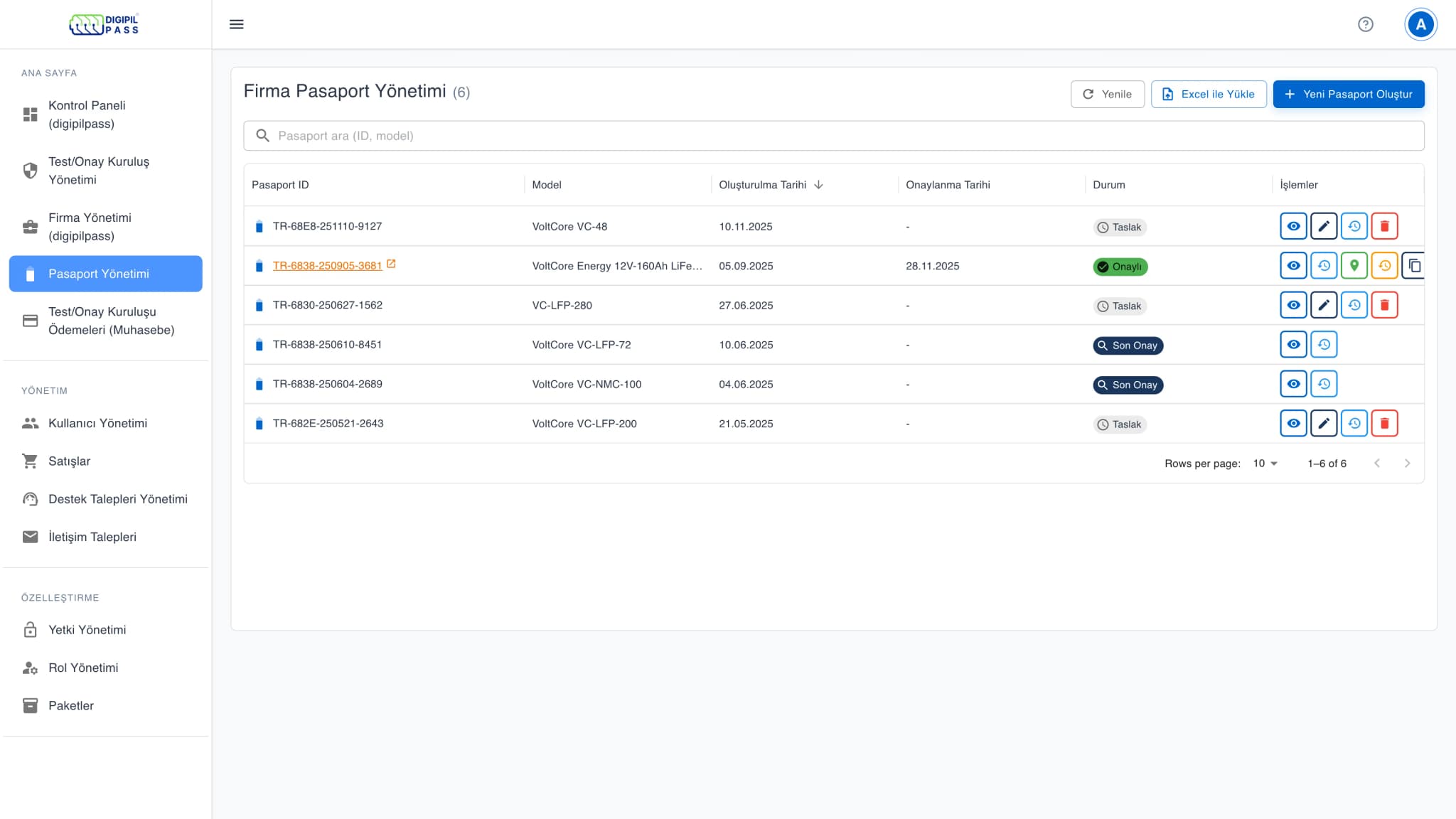
DigiPilPass gathers, in a single panel, everything manufacturers of rechargeable batteries, electric-vehicle batteries and industrial batteries must provide. It handles carbon-footprint calculations, lifecycle tracking and independent audit approvals — all of which become legal obligations between 2025 and 2030. Every company manages only its own data; consumers reach the information instantly via the QR on the battery.
Key features
- Battery-type specific passports (rechargeable, EV, industrial)
- Carbon footprint declaration
- Independent audit approval flow
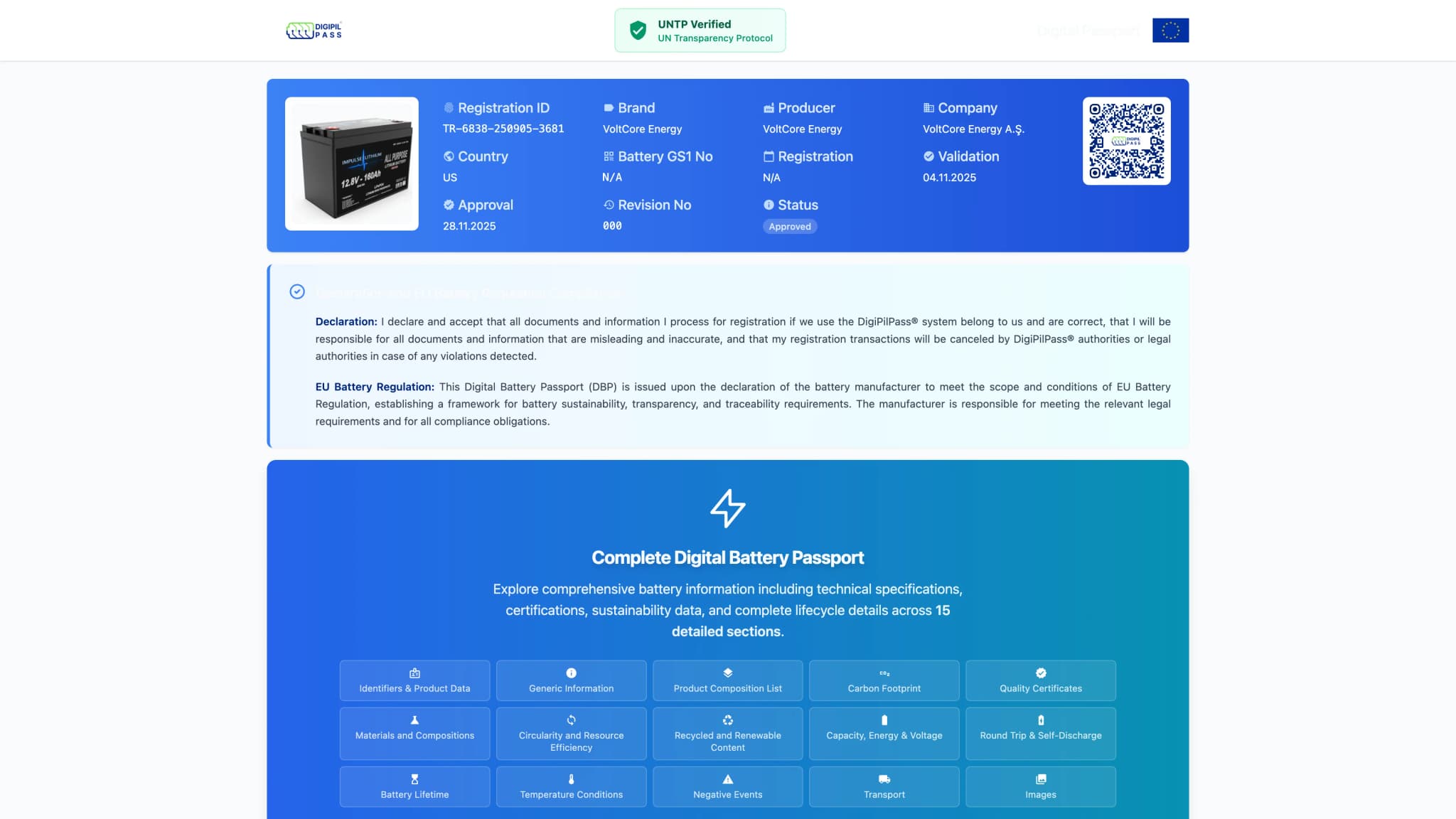
- Instant consumer access via QR
Use cases
EV battery manufacturer
Pushes carbon-footprint and lifecycle data for each battery model into the system and prepares the digital passport required for EU exports.
Rechargeable portable battery maker
Uploads production, usage and recycling data for batteries used in phones, laptops and similar devices and shares it with consumers via QR.
Industrial battery supplier
Generates compliance declarations and carbon-footprint reports for large-scale batteries used in UPS, telecom and energy-storage systems.
Independent validator
Reviews battery passports, returns non-compliant ones to the manufacturer and approves and certifies the rest.
Frequently asked questions
Which battery types does it cover?
It provides separate passport templates for rechargeable portable batteries, electric-vehicle batteries and industrial batteries (UPS, telecom, energy storage).
When does the EU Battery Regulation become mandatory?
Regulation 2023/1542 phases in starting in 2025; different information categories become mandatory through 2030. The system is built to handle each phase.
How is the carbon footprint calculated?
Emissions data from raw materials, production, transport and usage are entered and combined using LCA (lifecycle analysis) methodology to produce automated calculations.
What does a consumer see via the QR?
The manufacturer, capacity, chemical composition, recycling method, performance data and any hazardous-substance declarations — all the information legally required.
Who prepares and who approves the passport?
The battery manufacturer prepares the passport; an assigned independent validator verifies and approves it. Approved passports are accepted as regulation-compliant.
Screenshots